
Pruning
Do
Your Trees Need
a Good Pruning?
Pruning allows you to trim a tree to control its shape, clear areas of your property, or improve its appearance. At Émondage Évolution, we mainly work in the summer, when the leaves have come out, which is the best time to assess the structure of the tree.
Types of Pruning
Every tree has different needs.
We tailor our services to your specific situation.
Safety Pruning
Do you have dead branches that threaten to fall?
Safety pruning removes anything that poses a risk: dead wood, diseased branches, damaged parts. This is a priority when a tree becomes dangerous to your home, your car, or people on your property.
Thinning
Is your tree too dense and blocking all the light?
Thinning removes a portion of the foliage evenly to lighten the tree's mass. The result: more light on the ground, less wind and ice resistance, and a tree that breathes better.
Clearing
Are branches touching your roof, power lines, or encroaching on your neighbour's property?
Clearing frees up space around structures. We remove what's in the way without compromising the tree's health.
Crown Lift
Want to be able to walk under your tree or let more light reach the ground?
Crown lifting involves removing low branches to clear the space underneath while preserving the tree's natural shape.
Topping
Has your tree grown too tall for your property?
Removing the top of a tree reduces its lifespan and should only be done when no other option is possible. In certain specific cases, particularly for some varieties of fruit trees, topping may be appropriate.
Glossary: Terms to Know
Stump
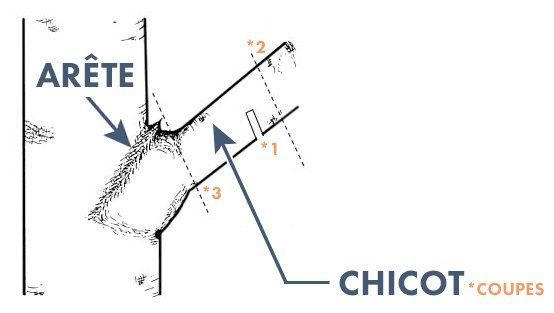
A stump is a remnant of a broken branch or trunk that protrudes from the tree. To allow the bark to close properly and prevent rot from setting in, the stump must be cut flush with the healthy part of the tree.
Sap Pull (Or Sap Call)
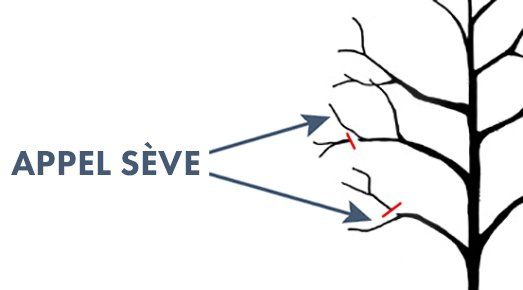
When pruning, always cut above a secondary branch so that the sap continues to flow to the end of the cut. This technique prevents the formation of dead wood and limits the appearance of suckers (excessive regrowth).
Sucker
A vigorous shoot that appears on the trunk or branches after pruning. Suckers are often poorly attached to the tree and can weaken its structure if not managed.
Crown
All the branches and foliage of a tree, i.e., the part above the trunk.
Defoliation
The loss of a tree's leaves, often caused by insects such as forest lacewings or by disease.
Dormancy
The period when the tree is dormant, usually in winter. The sap descends into the roots and the tree stops growing until spring.